Hotel Mattress Specifications the Housekeeping Team Can Use
The room is almost ready. Then housekeeping puts on the fitted sheet and discovers that the suite mattress sits too high for the linen already ordered. That is a mattress specification problem, even though everything on the delivery note matches the furniture plan. For a boutique hotel or serviced hospitality project, start with the actual base, mattress and bedding as a working set. Ask the furniture supplier to confirm the ordered pieces, and let room operations test the combination before it is repeated across the property.
HEZEN CASA manufactures and supplies furniture in Foshan, including upholstered bed frames, bedside furniture and a range of mattresses. Our furnishing service can help when furniture selections and drawings need to be discussed together. A property buyer can use the published choices to plan the first room, then ask for documentation that describes the exact order. The specification needs to make sense to whoever buys and receives the furniture, and to the person fitting linen after a busy checkout.
Put the installed bed height on the hotel mattress specification
The first number people ask for is often the mattress size. Add its depth, the approved support and the height of the finished mattress top once installed. Two catalogue items can give the room the same area for sleepers while changing the place where someone sits, the visible height of a table, and the amount of upholstered headboard left above the pillows. The actual top is a useful dimension to give the operator. Use the intended protector and linen when checking the room so the team sees the bed in service.
Compare a 26 cm profile and a 32 cm profile using real linen
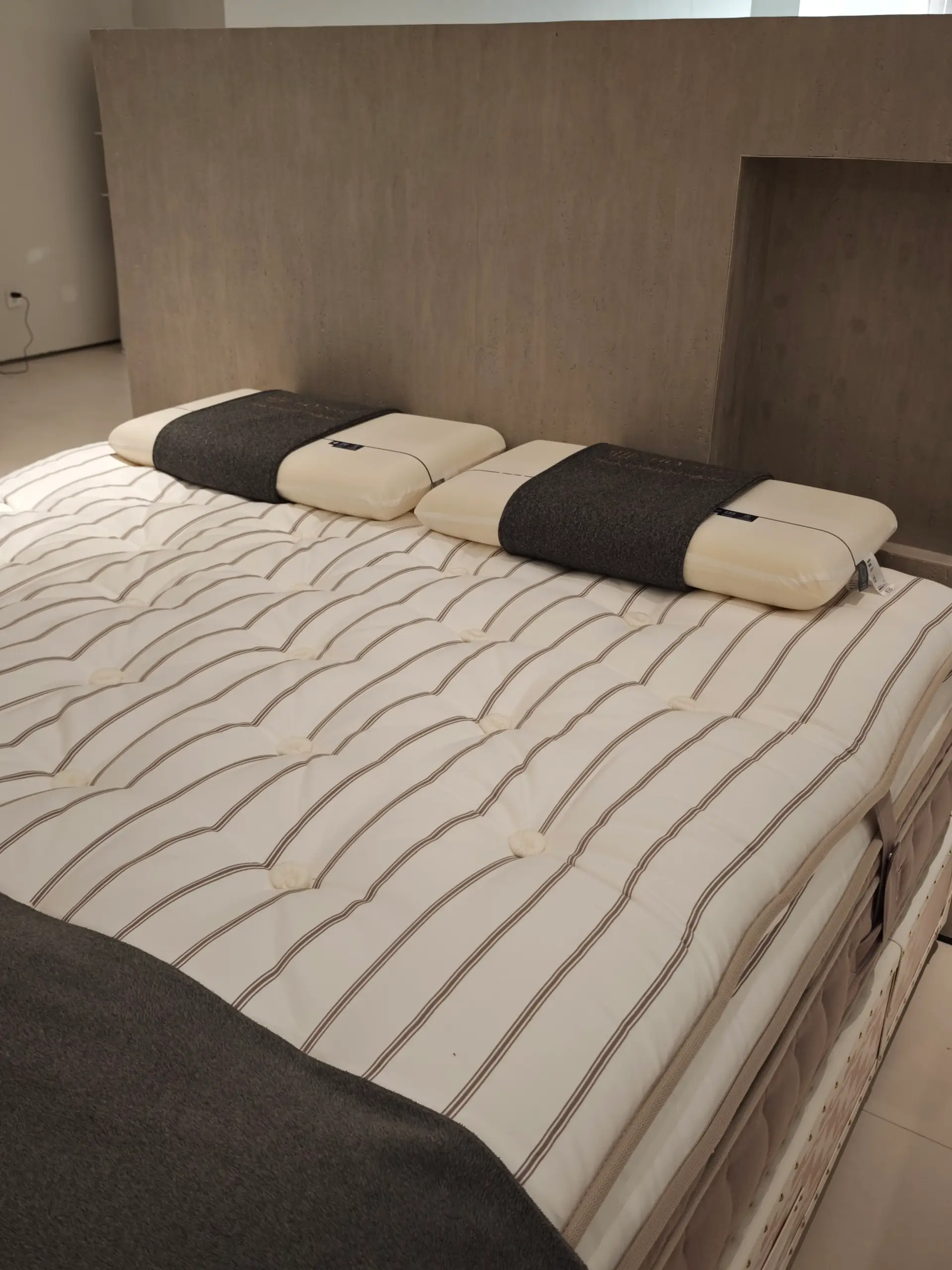
The Off-White Thin Stripe Hand Tufted Bed Mattress is listed at 200 × 180 × 26 cm with foam and pocket springs and a medium feel. The Cream Check Plush Thick Comfort Mattress is listed at 200 × 180 × 32 cm with foam and natural fiber and a medium-firm label. You can start a useful conversation with that six-centimetre difference. Ask the linen buyer to bring the fitted sheet and protector intended for the room. Try both on the actual product under consideration and make sure the package remains usable for hotel turnovers.
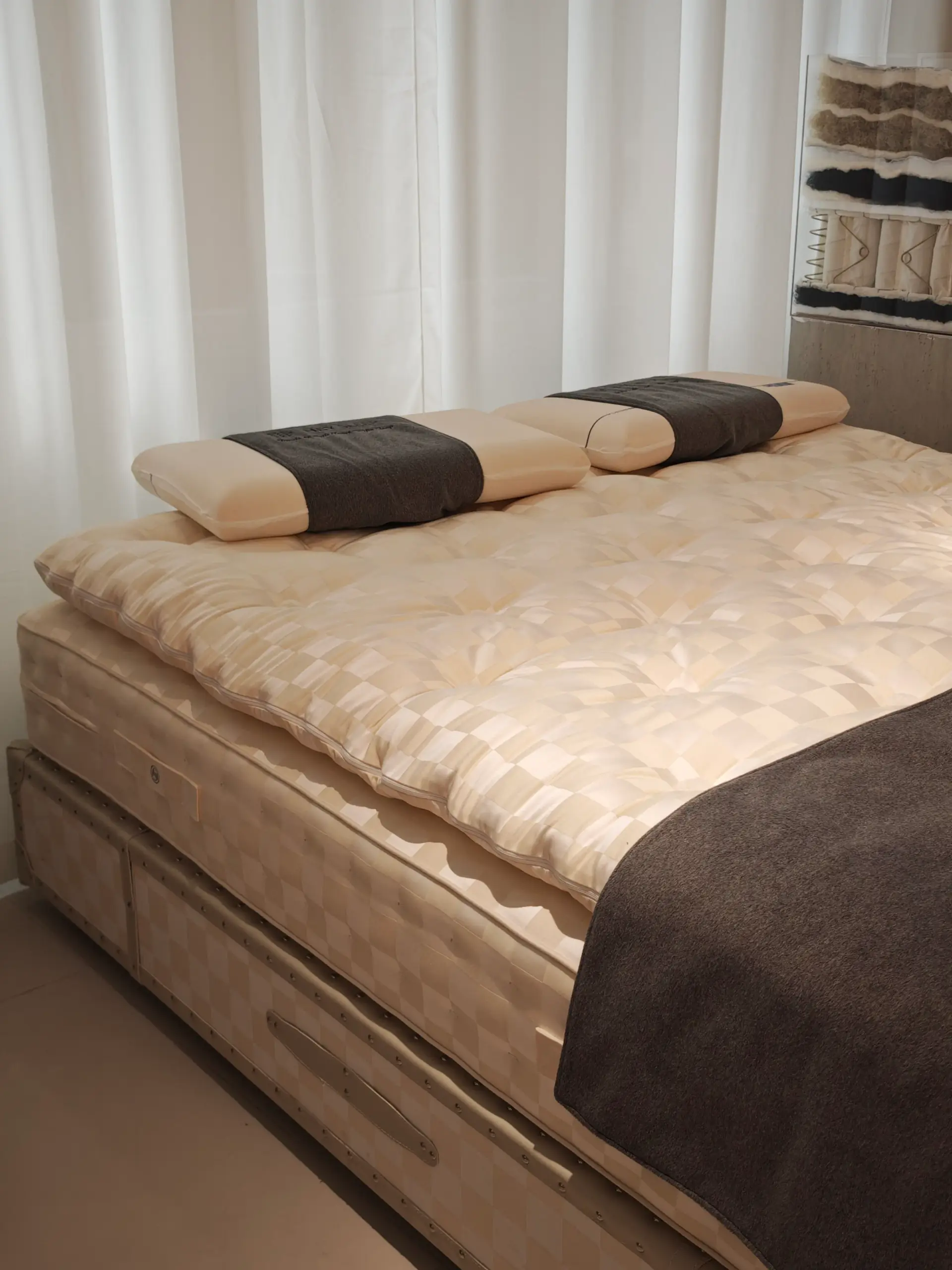
Imagine a property using the lower profile in its classic rooms and considering the deeper mattress for two suites. The owner wants to retain one linen order across the property. A printed pocket-depth value is a useful starting point for the linen team, but ask them to make both beds with the real protector and cover treatment. If the fit remains manageable, they can carry that common linen line into the order with confidence. If the deeper sample makes the corners difficult to finish or keeps pulling the protector loose during bed-making, the comparison has identified a difference before the extra stock is bought.
Have the team retain the sample configurations that were actually compared. Put the chosen cotton sheet or approved alternative beside the record for the 26 cm mattress, with the matching protector and the condition in which the bed was made. If the 32 cm option is used in the suite, give its approved layering the same treatment. Someone checking a change during the first linen reorder should be able to tell which items share a laundry supply and which need to be kept separate. A photograph of a perfectly made sample cannot resolve that question by itself.
Verify the bed support and nightstand against the final assembly
Use a drawing of the actual bed rather than calculating the finished height by stacking the envelope numbers. The Cream Tufted Bouclé Fabric Low Profile Platform Bed is listed at 210 × 180 × 100 cm. The Light Grey Linen Upholstered Bed with Wingback Headboard lists 220 × 180 × 120 cm. Those are catalogue bed dimensions. Ask where the mattress rests in the selected assembly, which foundation or support is appropriate, and how much of the mattress sits above the rail. Record the installed top from a finished floor reference.
Check the height in relation to the furniture a guest uses from the mattress. The Italian Minimalist Wooden Nightstand is listed at 45 × 40 × 50 cm. Use its top as a known comparison point if it is part of the room selection. Have someone sit against the chosen pillows and reach for a phone or glass. Move to the side and make the bed around the table. If a thicker mattress lifts the usable surface well above the table, decide whether the table, frame or mattress needs a different specification. Show the agreed heights together in the room drawing.
On a renovation that retains existing bed bases, name each type before sourcing a replacement mattress. Some rooms that look identical in a presentation may have acquired different frames during earlier work. Ask someone to check the existing support and usable opening in each group, then seek manufacturer guidance for the selected mattress. If the higher-profile option is still being considered, show the real retained base with it. Size labels can help an occupant understand the room, but dimensions, fit and compatibility belong in the order.
Take a side photo at the same height before and after an acceptable combination is fitted. On the HEZEN wingback, the upper extensions are a prominent part of the view. On the low bouclé platform, the padded side edge is easier to read if the bedding falls as intended. These are useful checks for the interior team. Add a closer view for the operations team that shows the actual joining line between mattress and frame. If a depth change alters either view, make sure the room drawing and buying schedule point to the same choice.
Write separate hotel mattress requirements for sleeping and servicing the room
Get the people who use and maintain the room into the same conversation. A comfort comparison asks what the chosen group of testers notice while using the bed. A service comparison asks whether staff can work around the frame, get the corners fitted and make the room ready again. The two assessments are related, yet each should have its own outcome on the record. The designer can preserve the line of the bed and the operator can point out that two sides of the room need room to work.
Ask housekeeping to change the exact mattress and protector combination
Start with an ordinary linen change, including the selected protector. Note where staff need to reach around the mattress, where the frame edge sits and whether the position of the table or wall change their approach. The Tempur Sealy Hospitality overview of mattresses for hotels demonstrates why hospitality manufacturers consider housekeeping alongside comfort. Use that general point when specifying your own bed assembly. The features listed for another supplier apply to its products. For any HEZEN mattress and base combination, use the actual fitting demonstration and its documentation.
A single photograph of the striped 26 cm mattress will help the team recognize the display. A short description of how it was set up will help someone repeat the trial. Record whether a topper was used, the protector model, where the mattress sat above the side rail, and whether staff needed to move the nightstand. Suppose one designer suggests adding a topper after the room is approved. Put it on the sample and redo the linen fit and height checks. The change is only small if the assembled bed can still be used and serviced as planned.
Run the same test in the more constrained of the rooms intended to use the selected platform. The wider mock-up might give staff a second way to reach the bed, while the finished corner suite has a wall return close to the linen edge. The two models' catalogue depths are known, so the decision here is how that particular room works with the chosen bed and linen combination. Watch the route a real worker takes with a bundle of bedding. Try clearing the table position in the drawing before assuming that an entirely different mattress is the only option.
Compare feel using the set that would be delivered, and record the manufacturer's wording along with the tested configuration. The mid-range comfort label posted for the striped mattress and the medium-firm description for the deep cream check refer to catalogue descriptions. A hotel cannot tell future guests exactly how a mattress will feel to them based on those words. It can decide which documented configuration it plans for each room type and keep a repeatable basis for choosing it. Tell testers which room they are assessing and what bedding is in place.
Make the accepted hotel mattress identifiable on a later order
Keep the purchase record readable after opening day. Name the mattress, approved opening and support, construction description, confirmed packed measurements, accepted linen combination and room types. Mark the market documentation needed for the exact ordered assembly. For instance, the U.S. Consumer Product Safety Commission’s flammability business guidance is a starting point for a buyer evaluating requirements in the United States. Ask the responsible project team which rules apply to the destination and obtain the relevant documents. A catalogue dimension or comfort description provides no evidence that a specific assembly meets a destination's requirements.
If a property later changes a room from the thinner profile to the thicker one, the previous furniture invoice may name the same mattress footprint. The operator still needs to check the correct mattress line, its appropriate support, the revised linen fit, and the height of the nightstand beside it. Give the receiver a simple expectation for the delivery: which label identifies the replacement, which room uses it, and what should happen if it arrives with a model description that differs from the order. Scaling an approved choice across several rooms is easiest when these specific details travel together.
A spare stock decision can also sit beside the mattress schedule. If the operator wants to hold a replacement, record which rooms it can currently serve and what changes would rule it out. For example, the deeper cream check may be accepted in a suite but never have been tested with the retained support in some classic rooms. Keep that boundary on the stock record. If a hotel later confirms a single mattress for both groups after a trial, revise the list and keep the confirmed supporting documents. This is more useful than labeling an item as suitable everywhere based on open dimensions alone.
Draw the route from receiving to the floor as part of the final handoff. Check the packed mattress, chosen frame pieces and separate nightstands as the goods that will actually go through the lift and guest corridor. The published open mattress size tells the hotel what it is buying for the room. It does not give the packaged size or say whether the assembled piece can be moved in a particular way. Confirm that with the supplier, especially in an older property where a turn just outside the lift can affect who handles the bed and where packaging is opened.
Give each room type a record with the actual point where the team approved the assembly. The finishes and other furniture work can be tracked in the HEZEN CASA guest-suite furnishing guide. The mattress line belongs with the linen and support decisions that make this bed work. Check that the room plan identifies the correct frame version and shows the same mattress orientation used in the sample. This is particularly important when a hotel keeps more than one size or configuration in similar headboards.
When the last mock bed is dressed and the operator has signed off, hand the record to someone who did not attend. Ask them to choose the right product for a future replacement, locate its support and linen information, and identify the room it belongs in. If they can do that from the order information alone, the specification will still be useful when the team is busy and the sample room has long since opened.